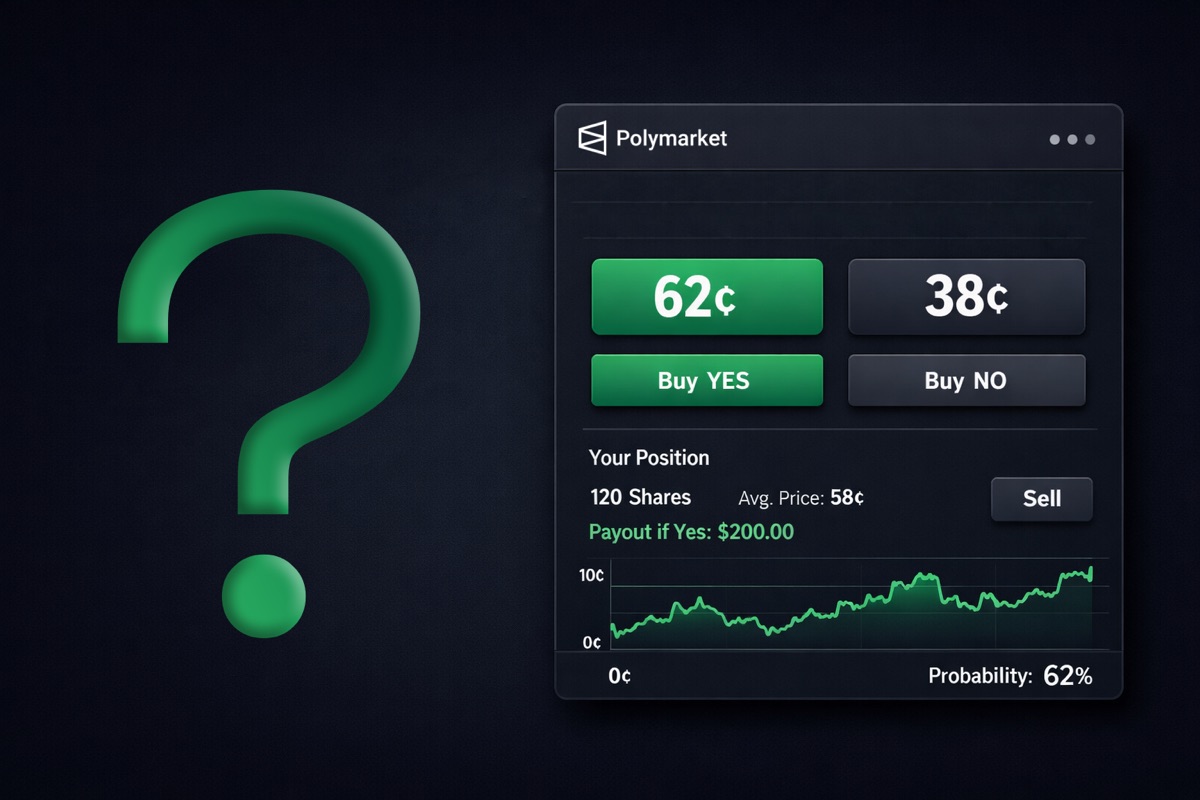
Prediction markets are exchanges where you trade on the outcomes of future events. Will inflation be above 3%? Who wins the Super Bowl? Will a bill pass Congress?
Instead of just having an opinion, you put money on it. This creates prices that reflect the crowd’s actual beliefs - often more accurate than polls or expert predictions.
How They Work
Every prediction market is a yes/no question. The price represents probability.
If “Team X wins the championship” is trading at $0.65, the market thinks there’s a 65% chance they win.
You can buy Yes (betting it happens) or No (betting it doesn’t). If you’re right, your contract pays out $1.00. If wrong, it’s worth $0.
Why They’re Accurate
Prediction markets aggregate information from thousands of people who have skin in the game. Unlike polls, where lying is free, markets punish incorrect beliefs with real losses.
Research shows prediction markets often outperform:
- Political polls
- Expert forecasts
- Statistical models
The wisdom of crowds, amplified by financial incentives.
Major Platforms
Kalshi: CFTC-regulated, US-based, covers politics, economics, sports, and more.
Polymarket: Crypto-based, global, deep political markets, zero fees.
Robinhood/DraftKings/FanDuel: Now offer prediction markets through partnerships.
Getting Started
- Pick a platform (Kalshi for beginners, Polymarket if you’re crypto-comfortable)
- Complete identity verification
- Deposit funds
- Start with small positions on topics you understand
- Learn and iterate
Master Prediction Markets
Get the complete guide to trading prediction markets profitably.
Get the Course →